
Why 40,000 Children Have No Place
There is a number that keeps coming up in conversations between Irish parents. It is not the price of a house. It is not the cost of living. It is the length of a creche waiting list.
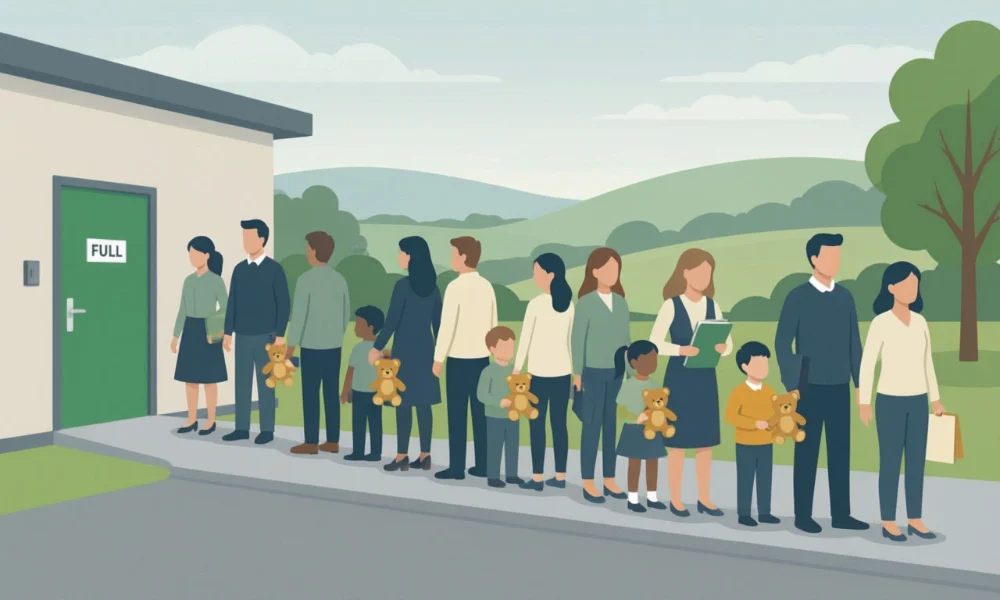
In some parts of Dublin, parents are being told to put their name down before their child is born. In Cork, Galway, and parts of the commuter belt, the wait can stretch to 18 months or more. And for babies under one, it is often worse.
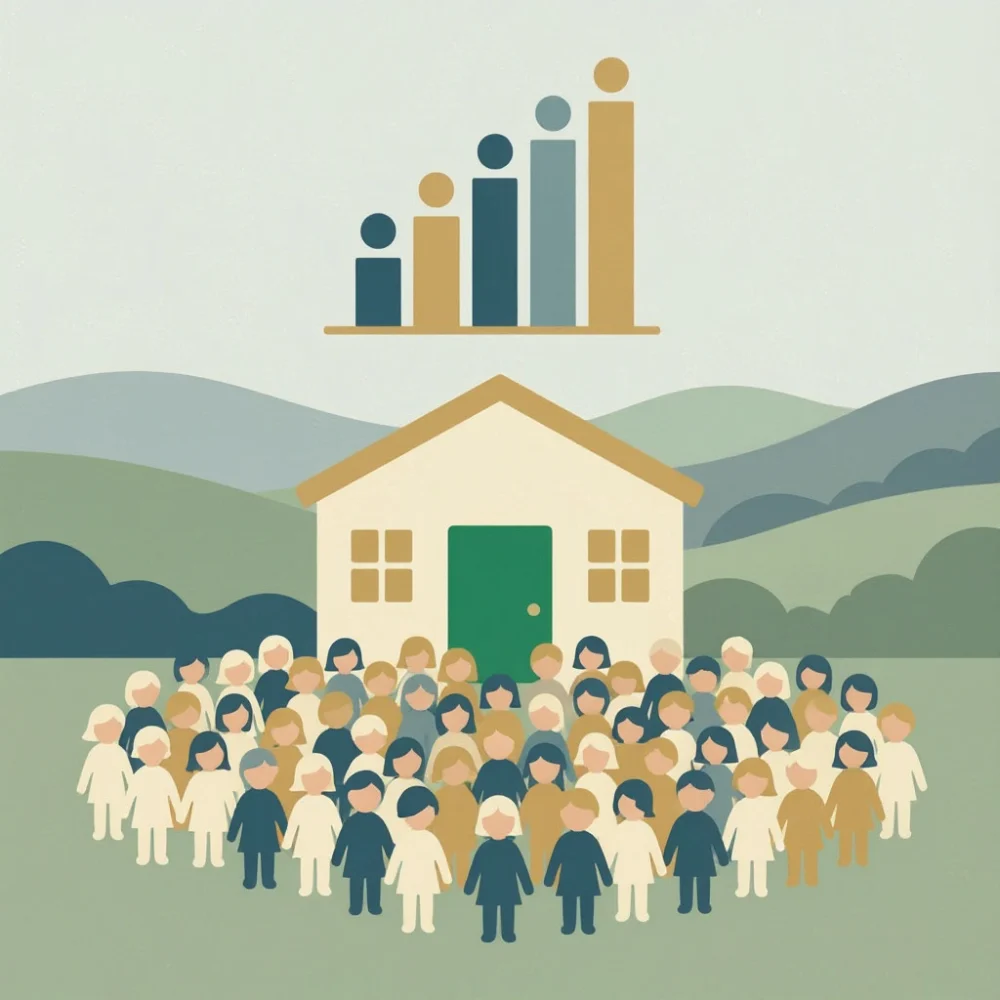
New figures from Pobal, the state agency that manages childcare data, show that around 40,000 children are on waiting lists for early years services across the country . That is not a small number. It is roughly the population of a large Irish town, all waiting for a place that may never come.
This is the story behind those numbers. Why it is happening. Where it hurts most. And what, if anything, is being done about it.
What the Pobal Data Actually Shows
Pobal publishes an annual report on the early years sector. It is based on data collected from thousands of services across the country. The 2024/2025 report gave us the clearest picture yet of the waiting list problem.
The headline figure is around 40,000 children on waiting lists nationally . But that number hides a lot of detail.
The worst pressure is in the under-3 age group. Babies and toddlers take up more staff time per child, which means services can take fewer of them. A room that can hold 20 three-year-olds might only be able to take 12 babies. That ratio is set by law, and it does not change based on demand.
The result is predictable. Parents of babies face the longest waits. In some areas, the wait for a baby place is over a year. By the time a place comes up, the child may have aged out of that room entirely.
For children aged three and over, the picture is different. The ECCE scheme guarantees a free preschool place for every eligible child. That means the pressure shifts from “will I get a place” to “will I get the place I want.” Parents may have to travel further, or accept a service that was not their first choice.
Why Is This Happening?
There is no single cause. It is a combination of several things, all happening at once.
More children, same number of places.
Ireland’s birth rate has been relatively high compared to other European countries. More babies means more demand for childcare. But the number of places has not grown at the same speed.
Between 2020 and 2024, the government invested heavily in the sector. Core Funding alone grew from nothing to hundreds of millions of euro. But most of that money went into keeping existing services open and improving pay. It did not build new rooms or hire enough new staff to meet the growing demand.
Staff shortages.
You cannot open a new baby room without qualified staff. And qualified staff are hard to find. The pay in early years has been low for years. Many educators left the sector during and after the pandemic. Some went to work in schools. Some left childcare entirely.
The Employment Regulation Orders that came into force in October 2025 were meant to fix this. They set minimum pay rates for early years educators and managers . Under the ERO S.I. No. 477 and 478, an Early Years Educator must now earn at least €15.00 per hour. A Centre Manager must earn at least €19.00 per hour .
But even with these new rates, the sector still struggles to attract enough people. The Joint Labour Committee ERO process is ongoing, and further increases have been proposed for 2026 . The hope is that better pay will bring more people back into the sector. But that takes time.
The cost of opening a new service.
Setting up a new creche is expensive. You need a building that meets Tusla standards. You need qualified staff. You need insurance, equipment, and enough capital to survive the first year before you fill your places.
For private providers, the maths is often tight. The fee freeze that comes with Core Funding limits how much they can charge parents. The EROs increase their wage bill. Even with government funding to offset some of that cost, many providers say they are barely breaking even.
That makes it harder to expand. Why open a new baby room when you are already stretched thin?
The under-3 problem.
The ratio rules are the biggest single factor in the under-3 shortage.
For babies under one, the ratio is one adult to three babies. For toddlers aged one to two, it is one adult to five. For children aged two to three, it is one adult to six. For three to six year olds, it is one adult to eight .
These ratios are there for good reason. Younger children need more attention. But they also mean that a baby room is expensive to run. You need more staff for fewer children. That makes baby places less profitable, or in some cases loss-making, for providers.
So many services simply do not offer baby places at all. They focus on the over-3s, where the ratios are more generous and the ECCE funding is available.

Where Is It Worst?
The waiting list problem is not evenly spread across Ireland. It hits some areas much harder than others.
Dublin and the commuter belt.
The highest demand is in and around Dublin. Areas like Blanchardstown, Tallaght, Swords, and the commuter towns of Meath and Kildare have some of the longest waits in the country. These are areas with lots of young families and not enough services.
Cork and Galway cities.
Both cities have seen strong population growth in recent years. But the supply of childcare places has not kept up. Parents in Cork city and Galway city report waits of a year or more for baby places.
Rural areas.
In rural Ireland, the problem is different. There may be fewer families, but there are also fewer services. In some villages, there is only one creche. If it is full, parents have no alternative. They may have to drive 20 or 30 minutes to the next town, or give up work entirely.
New housing developments.
When new estates are built, the families move in before the services do. A new housing development might add 500 families to an area that has only one creche. The result is instant waiting lists.
What Is Being Done?
The government has acknowledged the problem. Several measures are in place or planned.
Building Blocks.
The Building Blocks scheme provides capital funding to help services expand or open new rooms. In 2026, the government announced funding for up to 1,500 new full-day places, with a focus on areas of high demand . This is a start, but it is a small fraction of the 40,000 children on waiting lists.
Core Funding increases.
Core Funding has grown to €480 million for the 2026/27 programme year. That is a 22 percent increase. The money is meant to help services cover rising costs, including the higher wages required by the EROs, without passing those costs on to parents.
Admissions policies.
From 2026, all services must publish their admissions policies. This means parents will be able to see how places are allocated. It is meant to bring transparency to a system that has often felt like a black box. But it does not create new places.
The early years action plan.
The government’s “Shaping the Future” plan includes measures to expand capacity over time. But most of the big changes are in Phase 2, which runs from 2027 to 2029. For parents needing a place now, that is little comfort.
What Can Parents Do?
If you are on a waiting list, or about to join one, here are some practical things you can do.
Start early.
If you are pregnant or planning to have a child, start looking at services now. In high-demand areas, some parents put their name down before the baby is born. It feels absurd, but it is the reality.
Join multiple waiting lists.
Do not rely on one service. Join every waiting list you can. Yes, you may have to pay multiple deposits. But it increases your chances of getting a place.
Ask about admissions policies.
From 2026, services must publish how they allocate places. Ask for a copy. If a service will not show you, that is a red flag.
Consider childminders.
Registered childminders are part of the National Childcare Scheme. They can be a good option, especially for babies and toddlers. The government has been trying to bring more childminders into the formal system, which would make them eligible for subsidies.
Talk to your local CCC.
Your City or County Childcare Committee can tell you which services in your area have places. They cannot magic a place out of thin air, but they can point you in the right direction.
Consider flexible work.
Some parents reduce their hours or work from home part of the week to reduce the number of days they need childcare. It is not ideal, but it can bridge the gap until a place becomes available.

The Bottom Line
The waiting list crisis is not going away soon. The causes are deep: too few places, too few staff, and a funding system that is still catching up with decades of underinvestment.
The EROs and the Core Funding increases are real steps forward. They make the sector more attractive to workers and more sustainable for providers. But they do not build new rooms overnight.
For parents, the best advice is to start early, join multiple lists, and use every resource available. For the government, the challenge is to turn investment into actual places, in the areas where they are needed most.
The 40,000 children on waiting lists are not just a statistic. They are families making hard choices about work, money, and care. Until the places catch up with the demand, those choices will keep getting harder.
Early Years Ireland is an independent digital publication. We are not affiliated with any representative body or trade union. This article is for information only and does not constitute legal or financial advice. For personalised advice on childcare places in your area, contact your local City or County Childcare Committee.