
A step-by-step guide for parents on the ecce scheme 2026 ireland and how to apply.
Every September, thousands of Irish parents do the same thing: they drop their child off at a preschool that costs them nothing. Not a reduced rate. Not a subsidised rate. Actually free.
It sounds too good to be true, but it is real. It is called the ECCE scheme. If you have a child between roughly two and a half and five, you are probably entitled to it.
The full name is the Early Childhood Care and Education scheme. It gives every eligible child two full years of free preschool before they start primary school . That is 15 hours a week, 38 weeks a year, completely paid for by the government .
But here is the thing. The ECCE scheme 2026 Ireland rules are not difficult, but they are specific.
Miss the deadline, miss the age window, or fail to submit the right document, and your child could lose their place.
This guide walks you through everything, step by step, in plain language.
What Exactly Is ECCE?
Think of ECCE as a free introduction to school. Your child goes to a preschool, playschool, naíonra, or Montessori setting for three hours a day, five days a week . The learning is play-based. There is no homework, no uniforms, no exams.
The scheme runs for 38 weeks each year, from September to June. It follows the primary school calendar. So when the schools close for summer, the ECCE year ends too .
The government pays the preschool directly. You do not get a cheque in the post. You just do not get a bill for those 15 hours. If your child attends for longer than three hours a day, you pay for the extra time. But the core preschool hours are free.
Who Qualifies? The Age Rules Explained
This is where most parents get confused. So let us make it simple.
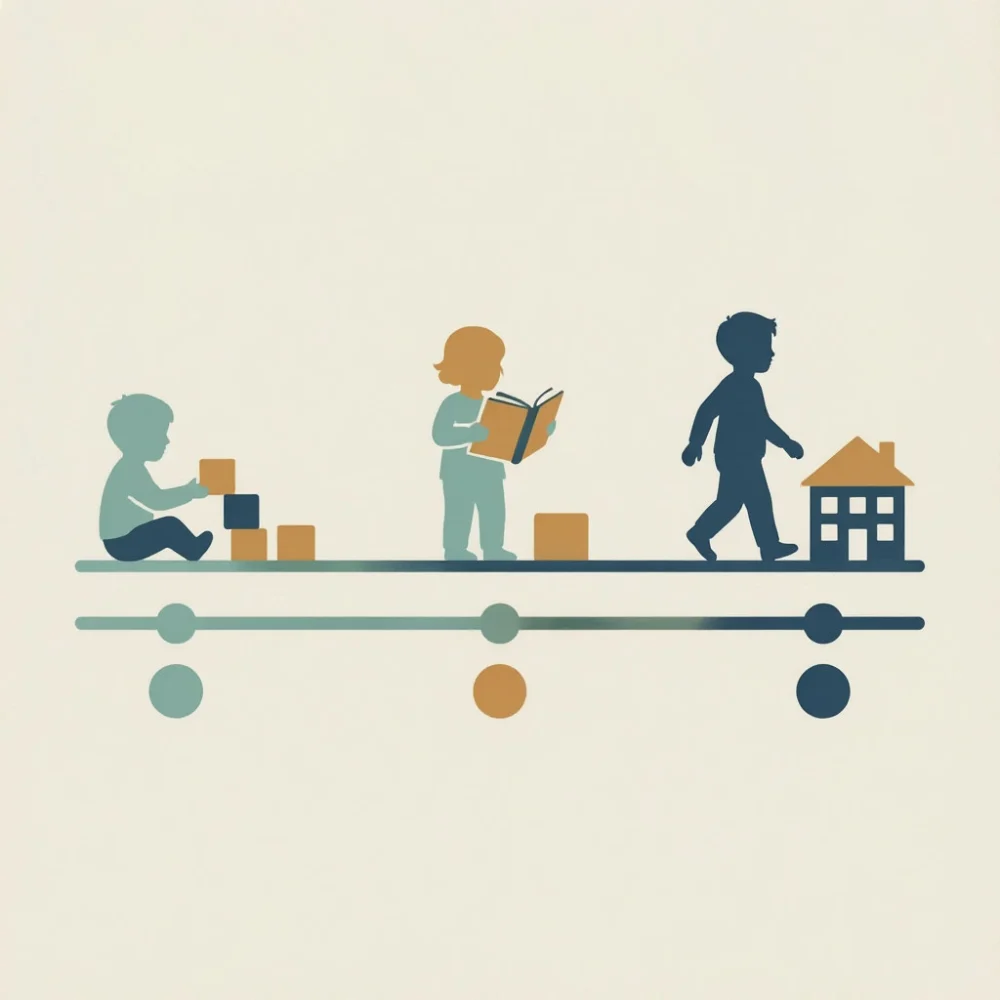
Your child must have turned 2 years and 8 months by 31 August of the year they start . And they must not be older than 5 years and 6 months by 30 June of the year the programme ends .
Here is a real example. If your child was born between 1 January 2024 and 31 December 2024, they can start ECCE in September 2027. They then get a second year, from September 2028 to June 2029 .
You do not need to decide which year to start. The system offers two years, and most children take both. The first year often begins when the child is around three. The second year leads directly into primary school.
There is one exception to the upper age limit. If your child has special educational needs, you can apply for an exemption. But you must contact the Department directly. Applications can only be accepted from a parent or guardian .

How to Apply: The Step-by-Step Process
Step 1: Find a participating preschool.
Not every childcare service offers ECCE. You need one that is registered with Tusla and has a contract with the Department to deliver the programme . Most full-day creches, part-time services, playschools, and naíonraí do offer it. But ask before you assume.
Step 2: Talk to the provider about a place.
ECCE places are not allocated by the government. They are allocated by the preschool. Some services have waiting lists. Some fill up months in advance. The earlier you inquire, the better.
Step 3: Fill out the Pre-Registration Form.
Once you have a place, the provider will give you a Pre-Registration Form. This is how you register your child for the scheme. You fill it out, and the provider submits the details through the Early Years HIVE system .
Step 4: Provide the required documents.
You will need three things:
The form will also ask about ethnicity identifiers. You do not have to answer those questions. They are optional. But the core details above are required.
Step 5: Sign the Applicant Declaration Form.
This form shows what fees, if any, apply to the extra hours your child attends beyond the free 15. It also shows any discounts or optional extras you have agreed with the provider. Read it carefully. Sign it if you are happy .
Step 6: Confirm your start date.
The provider will tell you when your child’s ECCE place begins. Most start in September. Some services have staggered start dates. Ask for the exact date in writing.
ECCE and NCS Combined: How to Pay Less for Extra Hours
Here is where the ECCE scheme becomes even more valuable.
The free 15 hours are great. But many parents need more. They work full-time. They need a full day, not a half day. So they pay for the hours outside ECCE.
That is where the National Childcare Scheme (NCS) comes in. You can use NCS subsidies to reduce the cost of those extra hours .
Here is a real example. Your child attends a creche from 8am to 6pm. That is 50 hours a week. ECCE covers 15 of those hours. You pay for the other 35.
Under the NCS, you get a subsidy per hour for those 35 hours. The universal subsidy is currently €2.14 per hour. If you qualify for the income-assessed subsidy, it is even higher. The government has raised the income thresholds, so more families qualify .
So you are not choosing between ECCE and NCS. You are using them together. ECCE covers the preschool hours. NCS covers the wraparound care. This is how the government wants it to work.
The key point: make sure your provider is registered for both. If they only offer ECCE and not NCS, you cannot claim the subsidy for extra hours. Ask before you enrol.
Children with Special Educational Needs: AIM Support
If your child has a disability or additional needs, there is extra help available. It is called the Access and Inclusion Model, or AIM .
AIM is not a diagnosis-based programme. Your child does not need a formal diagnosis to qualify. It is based on their needs when starting preschool.
There are seven levels of support. The first three are universal. They include training for preschool staff to create inclusive environments. Levels four to seven are targeted. They include expert advice, special equipment, therapeutic supports, and additional funding for extra assistance in the preschool room .
You and the preschool apply together for targeted supports. Your local City or County Childcare Committee can help you with the process .
What If Your Child Does Not Attend?
Life happens. Children get sick. Families go through hard times. But ECCE has rules about attendance.
If your child is absent for four weeks in a row, they may lose their ECCE place . That is a serious consequence, and many parents do not know about it.
There are exceptions. If the child, a sibling, or a parent has a prolonged illness, the place can be kept for up to 12 weeks. If there is an immediate family bereavement, the place can be kept for up to six weeks .
If you know your child will be absent, tell your provider. Do not just assume the place will be there when you return.
Common Questions Parents Ask
Does my child have to attend ECCE?
No. Preschool is optional in Ireland. But 96 percent of families take up the ECCE place. Over 70 percent of low-income families say they could not send their child to preschool without it .
Can my child do ECCE and Early Start at the same time?
No. You cannot enrol in both programmes at once .
Can my child attend a naíonra?
Yes. Naíonraí are Irish-medium preschools. They are registered ECCE providers. There are over 200 naíonraí in Ireland . The ECCE scheme works the same way.
What if my child is too old for ECCE?
There is an exemption process for children with special educational needs. But there are no exemptions to the lower age limit .
Who do I contact if I have questions?
Your local City or County Childcare Committee (CCC). They provide free advice to parents about ECCE, NCS, and all childcare schemes. You can also call the Pobal Parent Centre at 01 906 8530 .
The Bottom Line
The ECCE scheme 2026 Ireland is one of the most generous preschool programmes in Europe. Two full years of free preschool, 15 hours a week, for every eligible child.
But it is not automatic. You have to register. You have to provide the right documents. You have to understand how ECCE and NCS work together.
If your child is approaching the age of eligibility, start planning now. Find a participating provider. Ask about their ECCE places. Fill out the forms. And if you are unsure about anything, contact your local CCC. They are there to help.
Early Years Ireland is an independent digital publication. We are not affiliated with any representative body or trade union. This article is for information only and does not constitute legal or financial advice. For personalised advice on your child’s eligibility, contact your local City or County Childcare Committee.