


How the New Income Thresholds Work
If you are a parent in Ireland paying for childcare, there is a good chance you are leaving money on the table. Not because you did anything wrong. But because the rules changed on 31 August 2026, and many families do not yet know how much more they could be getting.
The National Childcare Scheme (NCS) is the government’s main way of helping parents pay for creches, preschools, and after-school care. It gives money directly to your childcare provider, which reduces the amount you pay each week.
On 31 August 2026, the income limits for the scheme went up. A lot. And that means thousands of families who were getting a small subsidy, or no subsidy at all, could now qualify for much more.
Here is the simple version of what changed, who benefits, and what you need to do.
Two Types of Help: Universal and Income-Assessed
Before we get into the numbers, it helps to understand that the NCS gives out two different kinds of support.
The first is called the Universal Subsidy. It is available to every family, no matter how much you earn. It is worth up to €96.30 per week, or €2.14 per hour, for a maximum of 45 hours of childcare per week .
The second is called the Income-Assessed Subsidy. This is the one that depends on how much money your family brings in. It can be worth much more than the universal rate, but you have to qualify based on your income.
The changes on 31 August 2026 affect the Income-Assessed Subsidy. And they are significant.
The Old Rules vs. The New Rules
Under the old rules, the income limits were quite tight.
If your family income was under €26,000, you got the maximum subsidy rate . That is a low threshold. If you were a single parent working part-time, or a couple with one modest income, you might just squeeze under it. But anyone earning a normal wage was above it.
If your family income was between €26,000 and €60,000, you got a reduced subsidy. The amount went down gradually as your income went up. And if you earned more than €60,000, you got nothing from the income-assessed side. You could still get the universal subsidy, but that was it .
From 31 August 2026, the limits are much more generous.
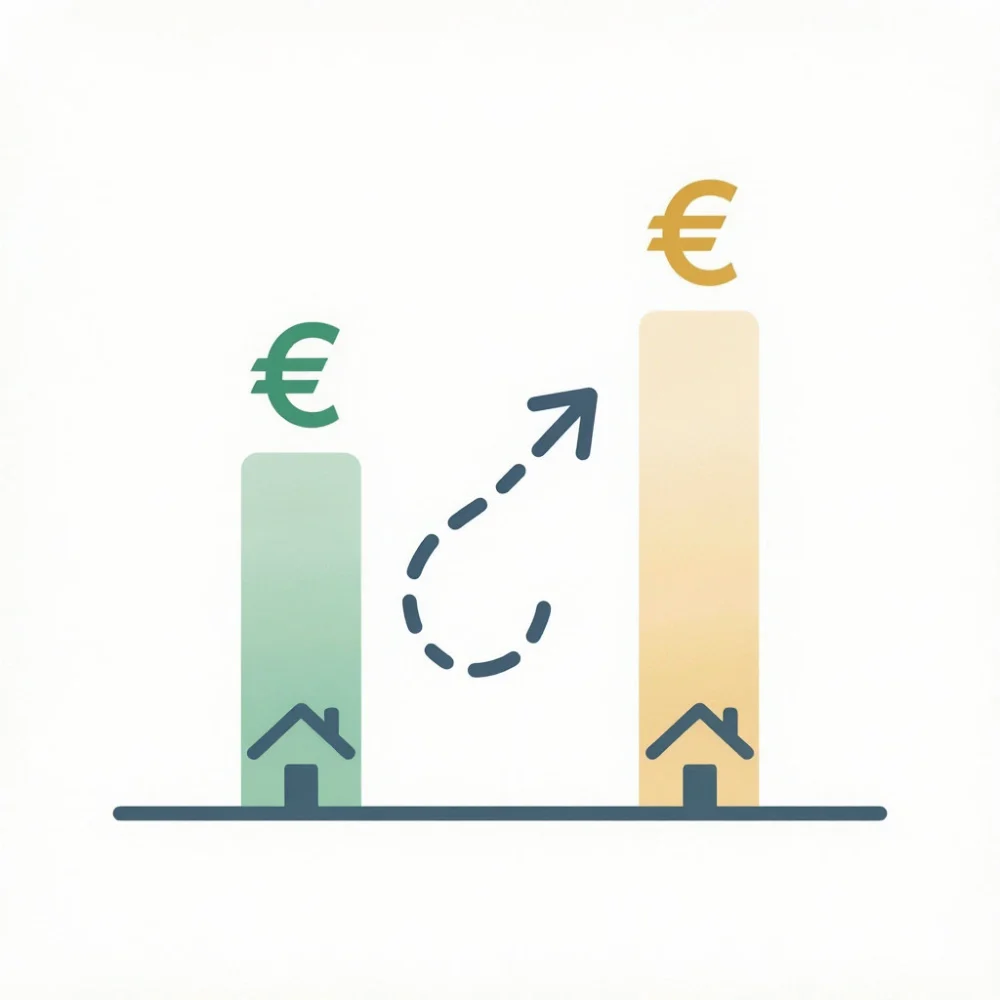
The lower threshold has gone from €26,000 to €34,000. The upper threshold has gone from €60,000 to €68,000 .
In plain English: if you earn €34,000 or less, you now get the maximum subsidy. If you earn between €34,000 and €68,000, you get a subsidy that reduces gradually as your income rises. And if you earn more than €68,000, you can still get the universal subsidy, but not the income-assessed one.
The government expects this to help around 47,000 children .
What This Means in Real Money
Let us put some actual numbers on this, because that is what matters.
Take a family with one child aged between 24 and 52 weeks. That is the age group the government uses for its examples.
If your income is €34,000: Under the old rules, you would have received €4.40 per hour. Under the new rules, you receive €5.10 per hour . That is an extra 70 cents for every hour your child is in childcare.
If your child is in care for 40 hours per week, that is an extra €28 per week. Over a year, that is more than €1,400.
If your income is €60,000: Under the old rules, you would have received €2.14 per hour. That was the same as the universal rate. Under the new rules, you receive €2.84 per hour . That is an extra 70 cents per hour.
Again, for 40 hours per week, that is an extra €28 per week. Over a year, that is over €1,400 more in your pocket.
The exact rate you get depends on your child’s age and your specific circumstances. But the pattern is clear: most families earning between €26,000 and €60,000 will see their subsidy go up .
The Multiple Child Discount: A Bigger Help for Bigger Families
If you have more than one child in childcare, there is another change that could help you even more.
The scheme has something called the Multiple Child Discount. This is a deduction from your income when the government calculates your subsidy. It is like saying: “We know you have extra costs because you have more than one child, so we will pretend you earn less than you actually do.”
From 31 August 2026, the discount got bigger .
If you have two children under 15: The discount went from €4,300 to €5,500.
If you have three or more children under 15: The discount went from €8,600 to €11,000.
Here is a real example from the government that shows why this matters .
Imagine a family with three children and a combined income of €78,000. Under the old rules, they would be above the €60,000 limit, so they would not qualify for the income-assessed subsidy at all. They would only get the universal rate.
But under the new rules, the €11,000 multiple child discount is applied to their income. Their reckonable income is treated as €78,000 minus €11,000, which is €67,000. That is below the new €68,000 threshold. So now they qualify for an income-assessed subsidy .
That is a family that would have gotten nothing extra before, now getting a meaningful subsidy every week.
What About the Universal Subsidy?
The universal subsidy has not changed. It is still €2.14 per hour, up to a maximum of 45 hours per week, for every family regardless of income .
But here is something important. If you are currently getting only the universal subsidy, you might be able to get a higher rate now through the income-assessed subsidy. The government is encouraging universal recipients to check whether they qualify for more .
The only way to know is to use the Subsidy Calculator on the NCS website. It takes a few minutes and tells you exactly what you could get.
What Do You Need to Do?
This is the best part. If you are already getting an income-assessed subsidy, you do not need to do anything.
The NCS will automatically recalculate your rate using the new thresholds and the new multiple child discount. If your rate changes, they will let you know .
You do not need to re-apply. You do not need to submit new documents. You do not need to call anyone. The system does it for you.
The only thing you should not do is cancel your current application. If you cancel and re-apply, your subsidy payments will stop. So just leave it alone and wait for the notification .
If you are currently getting only the universal subsidy, you might want to check whether you would do better with the income-assessed subsidy. Go to www.ncs.gov.ie and use the Subsidy Calculator. If it says you would qualify for more, you can apply for the income-assessed award .
What If You Are Not Getting Any Subsidy At All?
If you are paying for childcare but not getting any subsidy, this is worth looking at.
If your family income is under €68,000, you might now qualify for the income-assessed subsidy, even if you did not before. The old limit was €60,000. The new limit is €68,000. That is an €8,000 difference .
If your income is above €68,000, you can still get the universal subsidy of €96.30 per week. It is not means-tested. Every family with a child in registered childcare is entitled to it .
The only way to find out is to check. The calculator on the NCS website will tell you in minutes.
What About School-Age Childcare?
The NCS is not just for babies and toddlers. It covers children up to the age of 15. That means if you are paying for a breakfast club, an after-school service, or a holiday childcare programme, you can use your subsidy for that too .
The same income thresholds apply. The same multiple child discount applies. So if you have an older child in after-school care, the changes could help you as well.

The Bottom Line
The changes to the National Childcare Scheme that started on 31 August 2026 are real. They are not just a press release or a promise. The money is already flowing.
If your family income is under €34,000, you now get the maximum subsidy. If your income is between €34,000 and €68,000, you get a subsidy that is bigger than before. If you have more than one child, the multiple child discount means your income is treated as lower than it actually is, which could push you into a higher subsidy bracket.
The government has put over €528 million into the NCS this year. That is a huge amount of money. It is there to help parents pay for childcare. But you have to claim it.
If you are not sure what you are entitled to, go to www.ncs.gov.ie and use the calculator. It will take you five minutes. It could save you hundreds of euro this year.
Early Years Ireland is an independent digital publication. We are not affiliated with any representative body or trade union. This article is for information only and does not constitute financial or legal advice. For personalised advice on your entitlement, contact the NCS Parent Support Centre or your local County Childcare Committee.